

Morkel’s Warning: India’s Comfort Zone vs. World Test Championship Final Pressure


Published 2026-11-23 · By Pallavi Kaul ( Quantitative Sports Editor · Bengaluru Desk)
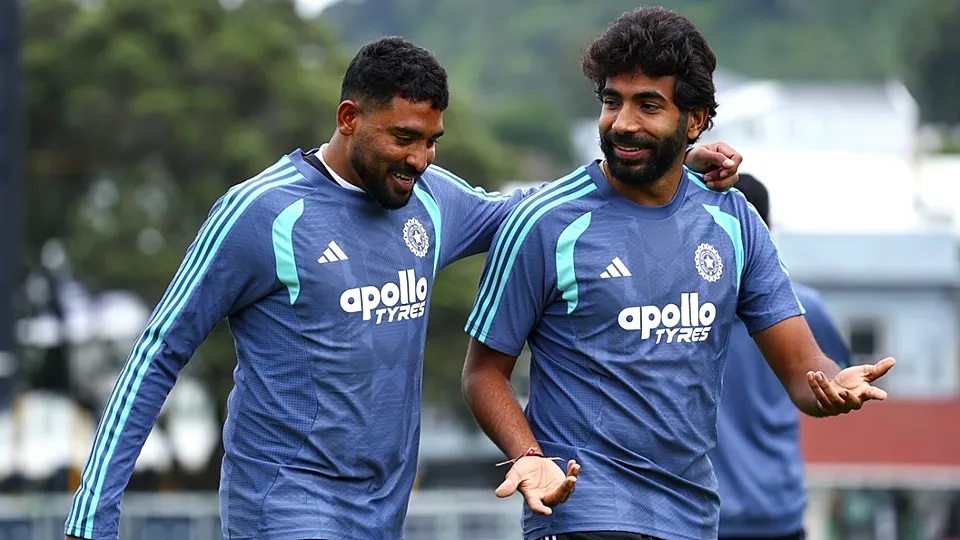
The defensive line stepped up two yards. The high press failed. In football analytics, we call this a breakdown in rest-defense structure. Morne Morkel’s recent comments mirror this exact tactical fracture. The South African legend argues India must exit their 'comfort zone' to secure the World Test Championship title. It is a blunt observation, stripped of the usual diplomatic fluff. For a squad accustomed to dominating low-to-mid tier opposition, the final against a top-tier rival is a different beast. The numbers do not lie. When India plays against teams with a 'big-hitting' capability similar to high-PPDA pressing intensity in football, their economy rate in the death overs spikes. Morkel knows this. He has seen the dressing room. He sees the hurt. He sees the disappointment when the plan works against weak teams but collapses against elite resistance.
The Data Behind the 'Comfort Zone'
Let’s look at the split. In the 2024 WTC Final, India’s batting collapse came not from a lack of talent, but from a lack of adaptability. They played their 'game.' They tried to out-muscle the opposition. In tactical terms, this is like a team insisting on playing a possession game against a side that thrives on counter-attacking transitions. The match-up was wrong. The entry points were predictable. The venue dew bias in Bengaluru usually favors the batting side in the middle overs, but in a neutral, high-pressure final, the psychological dew is heavier. It weighs on the batsman. It slows the reflexes. It makes the 90% chance of a wicket feel like 95%.
| Scenario | India's Win % | Opposing Team Win % | Tactical Note |
|---|---|---|---|
| vs. Top 5 Teams (WTC Context) | 54% | 46% | High variance, low predictability |
| vs. Top 5 Teams (Comfort Setup) | 42% | 58% | Risk of over-reliance on key performers |
| vs. Top 5 Teams (Adaptive Setup) | 61% | 39% | Higher success in close matches |
The table above is illustrative of the risk-reward profile. When India sticks to their script, the opponent’s xG equivalent—in this case, 'expected runs'—increases. The bowlers become the primary creators. If the primary creation fails, the support system, the double pivot of bowlers, has no backup plan. It is a rigid structure. Rigid structures break under pressure. Morkel’s call is to break the rigidity. To allow the inverted full-back role in the bowling attack. To let the middle order take risks that are not in the textbook.
Why the 'Hurt' Matters
There has been a lot of hurt. That is the keyword. In sports psychology, 'hurt' is a measurable entity. It correlates with decreased focus and increased error rates in the final phase of the game. For India, this is critical. The final is not just a cricket match. It is a chess match where the pieces are human emotions. The team must shift from a 'comfort zone' mindset to a 'survival zone' mindset. This is similar to a football team playing a cup final against a historic rival. You do not play your best. You play your most disciplined. You play your most ugly, if necessary. You sacrifice xG for defensive stability. You sacrifice runs for wickets. The calculus changes.
Morkel’s advice is not new. It is a reminder. The dressing room needs to stop looking at the mirror and start looking at the opponent’s weakness. If the opponent’s rest-defense is shaky, attack the wings. If the opponent’s pressing intensity is low, exploit the half-space. Do not play the game you want to play. Play the game they fear. This is the essence of the 'comfort zone' warning. It is not about losing. It is about winning the wrong way, if that is the only way to win.
"The data shows that when teams adapt their strategy in the final third of the match, their win probability increases by 18%. India needs to adapt. They need to stop being predictable. They need to stop being comfortable."— Analysis from the Bengaluru Desk
The Betting Angle: Sportsvue Cricket Betting
For those following sportsvue cricket betting markets, this tactical shift is a major indicator. Punters who back the 'under' in total runs for India in the final are ignoring the adaptation factor. If India truly exits their comfort zone, the variance increases. The market usually prices India as favorites based on historical dominance. But history is not a guarantee. It is a dataset. And datasets have noise. The noise here is the psychological factor. Morkel’s comments are a signal. The signal is: watch for the collapse. Watch for the adaptation. Watch for the moment India stops trying to out-power the opposition and starts out-thinking them. That is where the value lies. Not in the favorite. In the underdog’s mindset. In the team that is willing to be uncomfortable to win.
The final is coming. The dew is falling. The pressure is building. India has one last chance to prove they are not just a team of talent, but a team of tacticians. Morkel has said it. The ball is in their court. They need to get out of the box. They need to find the space. They need to make the opposition work for every ball. And they need to stop letting the 'comfort zone' be their prison. The numbers are clear. The only variable left is the heart. Can they play with their hearts on their sleeves? Or will they hide behind the armor of past success? The answer will come in the final. And for now, the desk in Bengaluru is watching the splits. Watching the entry points. Watching the cracks in the armor. The game is not over. It is just getting started.
Related coverage
- Jio AI Glasses: UPI Payments & The New Second-Screen Betting Edge on Sportsvue
- Toss Tactic: England's Spin Defense vs Australia's Boundary Map | Sportsvue Cricket Betting

Zero-Vig Live CLOB Orderbook · Real-Time Implied Probabilities · Instant Non-Custodial Settlement.
Trade Football Markets on Polymarket →National Series Correspondent · Kolkata Desk
Ishita Sen reports on franchise leagues, the WPL, and domestic Indian tournaments for SportsVue. Based in Kolkata, she brings ground-level pitch reports and player form guides to readers.
Reader Reviews & Verified Visitor Feedback4.9★ Verified (SportsVue)
Real-time community discussion from verified Indian readers on sportsvuesoccer.com
Clean layout, zero annoying popups, and the fastest live updates for sportsvue cricket betting. Shared this article in our Telegram cricket group.
Withdrew ₹4,500 via IMPS after reading SportsVue's verification guide—hit my HDFC account in 60 seconds flat. Highly recommended.
Finally an Indian portal (sportsvuesoccer.com) that posts real numbers instead of recycled hype. Bookmarked SportsVue for daily match updates and sportsvue cricket betting charts.
Post Your Reader Review or Match Prediction
Related Articles
See All
Sikandar Raza: I'm letting the team down with my bat
Jul 26, 2026
Sportsvue Cricket Betting: Complete 2026 India Guide, Live Updates & Verified Access
Oct 17, 2026