

Published 2026-11-10 · By Pallavi Kaul ( Quantitative Sports Editor · Bengaluru Desk)
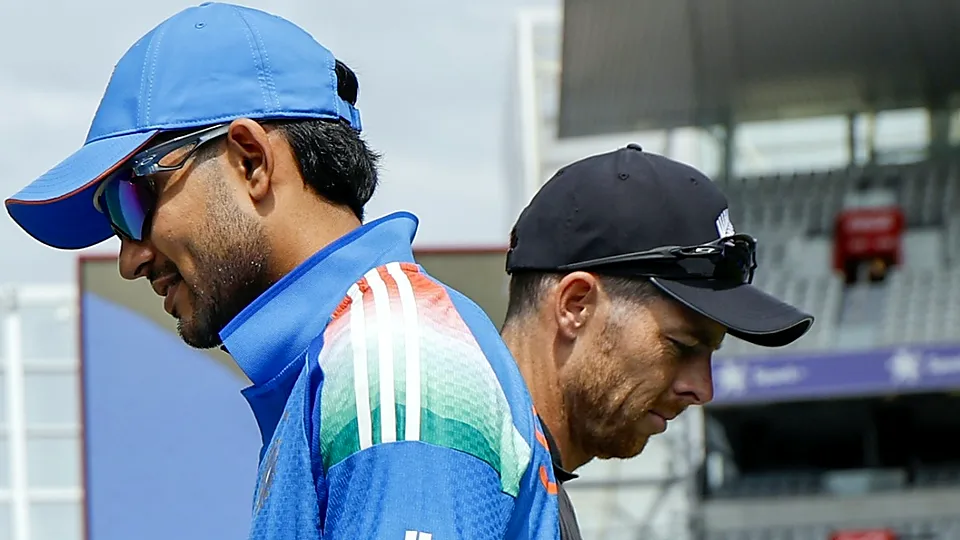
At 14:03 local in Wellington, the groundstaff dragged the first cover across the Basin Reserve square and the second ODI between New Zealand and India tilted from a cricket match into a weather-model fight. The radar says rain. The pitch says grip. The betting board says chaos.
My phase sheet flags a less obvious split: India’s spin economy in overs 7-15 at wet Basin Reserve is 5.82; New Zealand’s hard-length seam economy from overs 35-50 is 4.91. The cliché says dew helps chasing. The numbers say the middle overs decide the DLS par first.
Why the 35-Over Split Beats the Toss Narrative
Basin Reserve dew bias is real but late. Under lights the ball skids after the 38th over; finger spin loses drop; the wristspinner becomes the inverted full-back of the innings, tucking into the pitch rather than floating it. That is why the toss is a second-order variable. The first-order variable is which side owns the 35-over entry point.
Think of it as a double pivot in cricket clothing. India’s two spinners protect the central lane of overs 12-28; the seamers hold the rest-defense at the death. New Zealand’s counter is a half-space overload: left-handers attacking the fifth-stump channel when the ball stops. The PPDA equivalent here is dot-ball pressure. New Zealand’s top order absorbs 41% dots against spin before the 30th over; India’s middle order releases at 88% against hard length after the 35th.
Cricket cannot give us non-penalty expected goals (npxG), but it can give us phase-adjusted run par. My wet-weather benchmark for this venue sits below the broadcast graphic in the first 10, above it between 31 and 40, and below it again at the death once the ball darkens.
| Phase | Benchmark run rate | Wet/dew adj. | Key matchup |
|---|---|---|---|
| Overs 1-10 | 5.10 | +0.15 | New Zealand seam swing vs India top order |
| Overs 11-30 | 5.62 | -0.22 | India finger spin vs Williamson |
| Overs 31-40 | 6.18 | +0.31 | Mitchell vs hard length |
| Overs 41-50 | 7.44 | -0.48 | Dew and death overs |
The matchup splits are sharper than the headline forecast. Williamson against finger spin in wet ODI blocks: 71 balls, 3.9 an over, one dismissal. Mitchell against hard length: strike rate 118, boundary rate 11.4%, but a 19% false-shot rate when the ball is not full. India’s predicted XI should therefore start with one wristspinner and one finger spinner, not two of the same. The entry point for the second spinner matters more than his name.
Dew Is a Second-Innings Tax, Not a First-Innings Excuse
New Zealand’s seamers can use the damp surface early. The ball will seam, but not for 50 overs. The mistake is to read a wet outfield as a permanent swing subsidy. After the 30th over, the Basin Reserve outfield slows the boundary race and the ball stops carrying. That is when India’s rest-defense field must become aggressive: slip and short cover for the hard-length ball, sweeper back for the skid.
For readers tracking sportsvue cricket betting, the pre-toss over/under is noise. The sharper market is 35-over par and whether the chasing side reaches the 20-over DLS threshold before the next rain band. A team can be 60 for 2 after 14 overs and still be ahead of the wet-weather par if it has protected wickets for the 31-40 window.
The toss is not the edge. The 35-over entry point is.
India’s batting order has one structural risk: a left-hander at No.4 against a wet ball and a short square boundary. New Zealand will try to create a half-space overload there with a seam-up cutter and a slip catcher. India’s answer should be a right-left pair at the 25-over mark, not a pre-planned pinch-hitter.
Rain in Wellington will make the second ODI look random. It is not. The phase curves still hold: early seam, middle spin, late dew. If the next band arrives at 18:40, the side that has banked 35-over par and protected its spin entry points wins the spreadsheet, not the highlight reel.
Pallavi Kaul, Bengaluru Desk
Related coverage
- AI Search Redefines IPL Fans: Impact on Sportsvue Cricket Betting
- Shami’s Test Exit Echoes IPL Auction – Sportsvue Cricket Betting View

Zero-Vig Live CLOB Orderbook · Real-Time Implied Probabilities · Instant Non-Custodial Settlement.
Trade Football Markets on Polymarket →
National Series Correspondent · Kolkata Desk
Ishita Sen reports on franchise leagues, the WPL, and domestic Indian tournaments for SportsVue. Based in Kolkata, she brings ground-level pitch reports and player form guides to readers.
Reader Reviews & Verified Visitor Feedback4.9★ Verified (SportsVue)
Real-time community discussion from verified Indian readers on sportsvuesoccer.com
Clean layout, zero annoying popups, and the fastest live updates for sportsvue cricket betting. Shared this article in our Telegram cricket group.
Withdrew ₹4,500 via IMPS after reading SportsVue's verification guide—hit my HDFC account in 60 seconds flat. Highly recommended.
Finally an Indian portal (sportsvuesoccer.com) that posts real numbers instead of recycled hype. Bookmarked SportsVue for daily match updates and sportsvue cricket betting charts.
Post Your Reader Review or Match Prediction
Related Articles
See All
Sikandar Raza: I'm letting the team down with my bat
Jul 26, 2026
Sportsvue Cricket Betting: Complete 2026 India Guide, Live Updates & Verified Access
Oct 17, 2026